We've been sourcing blueberries for Kathmandu households since DokoFood started, working with multiple importers and tracking retail prices week to week across Bhatbhateni, Salesberry, and the wholesale berry desks at Kalimati. This guide is what we've learned — written for buyers who want to know what they're actually getting.
Why blueberries are worth the effort
Blueberries are one of the most nutrient-dense fruits available in Nepal. They earned the “superfood” label for good reason: a standard one-cup serving (148 g) provides about 16% of an adult's daily Vitamin C requirement and roughly 32% of the daily Vitamin K, in just 84 calories (USDA). The deep purple-blue color comes from anthocyanins — flavonoid compounds with documented antioxidant activity in human studies.
Beyond nutrition, blueberries are a useful pantry fruit. They tolerate freezing better than nearly any other berry, hold their structure in baking, and pair as easily with savory food (lamb, balsamic) as they do with breakfast oats. For households trying to add more antioxidant variety to their diet without committing to large produce volumes, blueberries are a sensible weekly staple.
Where Nepal's blueberries actually come from
Nepal has no commercial blueberry production at scale. Every fresh blueberry sold in Kathmandu is imported. From our records, the four dominant origins are:
- United States (Oregon, Washington, California): Peak harvest June–September. We see the largest, firmest berries from US farms, but landed costs are highest of any origin.
- Chile (Maule and BíoBío regions): Peak harvest November–March. The Chilean harvest is what keeps Kathmandu in blueberries through the southern winter. Quality is consistent; transit time is the main risk.
- Peru (La Libertad): Peak harvest October–February. Peru has overtaken Chile as the largest exporter to Asia by volume in recent years. Berries are slightly smaller than US fruit but often firmer.
- Morocco / South Africa (limited windows): Occasionally arrive in Q1. Quality is fine, volumes are low.
When you buy blueberries in Kathmandu, ask which country and which week the shipment was packed. Reputable importers will tell you. Anyone who can't, can't guarantee freshness.
2026 price reality in Kathmandu
Blueberry prices in Nepal are driven by three things: origin (US is most expensive), pack size (125 g is standard, 500 g and 1 kg packs have lower per-gram cost), and freight method (air vs. sea). Sea freight saves 30–40% but only works for berries packed in modified-atmosphere containers; otherwise quality at landing is poor.
| Tier | 125 g pack | Notes |
|---|---|---|
| Standard imported | Rs. 600 – 700 | Most supermarket stock; origin often unlabeled |
| Premium / jumbo | Rs. 700 – 850 | Larger berries; usually US or premium Chilean |
| Organic certified | Rs. 800 – 1,000 | USDA Organic or EU Organic; limited availability |
| DokoFood jumbo | Rs. 650 | Sourced from vetted Chile/Peru importers; cold-chain controlled |
- 125 g pack
- Rs. 600 – 700
- Notes
- Most supermarket stock; origin often unlabeled
- 125 g pack
- Rs. 700 – 850
- Notes
- Larger berries; usually US or premium Chilean
- 125 g pack
- Rs. 800 – 1,000
- Notes
- USDA Organic or EU Organic; limited availability
- 125 g pack
- Rs. 650
- Notes
- Sourced from vetted Chile/Peru importers; cold-chain controlled
Where to buy: five honest options compared
We've bought from each of these channels over the past two years. Here's how they actually perform on a typical Tuesday in Kathmandu.
| Channel | Quality | Availability | Price | Notes |
|---|---|---|---|---|
| Online direct (e.g. DokoFood) | Consistent | Daily | Rs. 650 | Cold-chain delivery; replacement on quality issues |
| Bhatbhateni — select branches | Variable | Weekdays mostly | Rs. 700 – 800 | Stock turnover is uneven; check pack date before buying |
| Salesberry / Big Mart | Variable | Inconsistent | Rs. 700 – 850 | Premium experience, but selection rotates weekly |
| Specialty fruit shops (Durbar Marg, Lazimpat) | Sometimes excellent | Limited | Rs. 750 – 900 | Worth visiting in person; ask the owner about origin |
| Kalimati Wholesale | Inconsistent | When direct importers offload | Rs. 500 – 650 | Cheapest option, no cold storage on display, highest risk |
- Quality
- Consistent
- Availability
- Daily
- Price
- Rs. 650
- Notes
- Cold-chain delivery; replacement on quality issues
- Quality
- Variable
- Availability
- Weekdays mostly
- Price
- Rs. 700 – 800
- Notes
- Stock turnover is uneven; check pack date before buying
- Quality
- Variable
- Availability
- Inconsistent
- Price
- Rs. 700 – 850
- Notes
- Premium experience, but selection rotates weekly
- Quality
- Sometimes excellent
- Availability
- Limited
- Price
- Rs. 750 – 900
- Notes
- Worth visiting in person; ask the owner about origin
- Quality
- Inconsistent
- Availability
- When direct importers offload
- Price
- Rs. 500 – 650
- Notes
- Cheapest option, no cold storage on display, highest risk
For most home buyers, online direct is the right answer in 2026: you pay a small premium over wholesale, but you don't pay it for mushy fruit. If you're buying in volume for a restaurant or event, talk to the importers directly — most are reachable through the wholesalers at Kalimati.
How we evaluate quality at intake
When a blueberry shipment arrives at our facility, we run the same five checks every time. Use them when you buy:
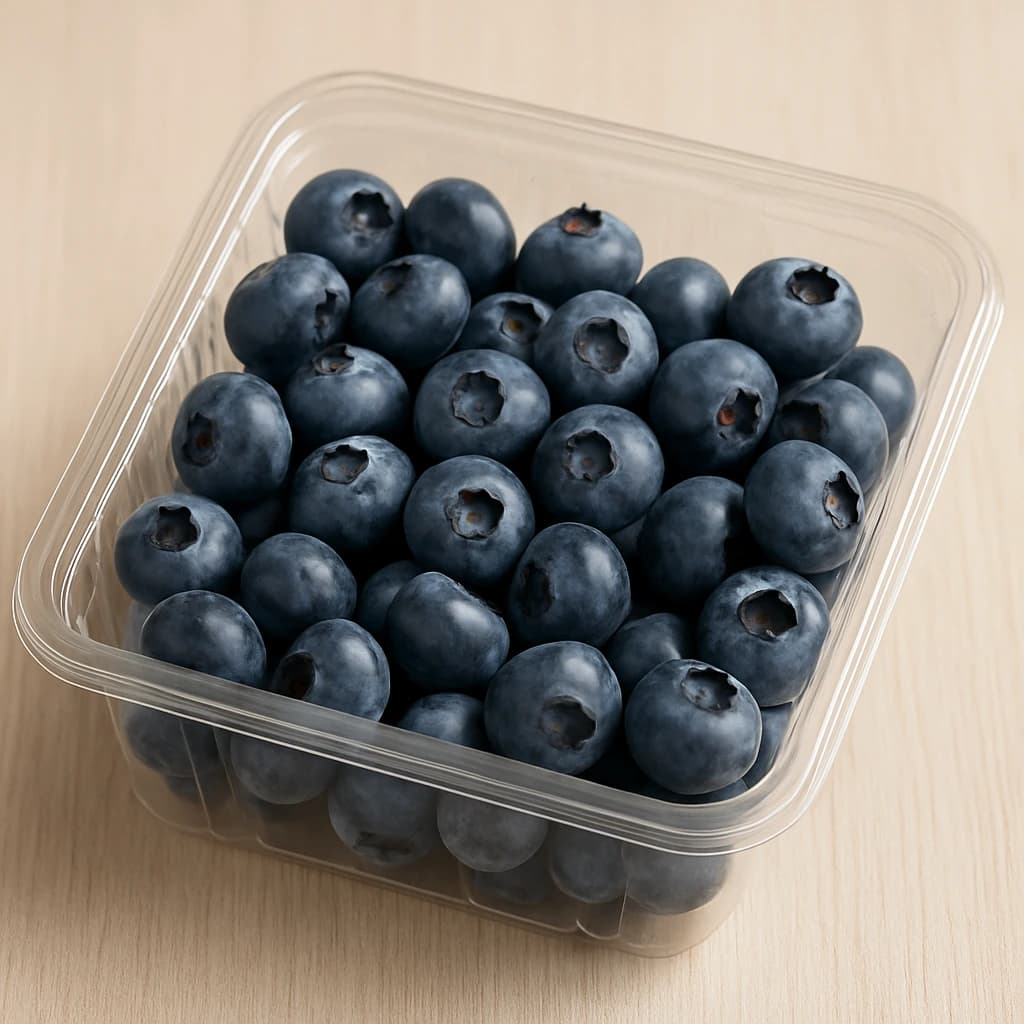
- Bloom intact: Fresh blueberries have a powdery, silvery coating called the bloom. It's a natural wax that protects the fruit. If the box looks shiny and wet, the bloom is gone — fruit will spoil faster.
- Firmness: Press gently through the lid. The fruit should be firm, not yielding. Soft berries indicate over-ripeness or temperature damage in transit.
- No leakage at the bottom: Any color staining at the base of the container means berries have ruptured. Even if the top looks good, the rest will follow within 48 hours.
- Uniform color: Look for deep blue to purple-black across the pack. Pink or red shoulders mean fruit was picked unripe and won't sweeten further.
- Smell: A faint sweet aroma is good. Anything sour, fermented, or musty means microbial spoilage has started.
Storage in Nepal's climate
Kathmandu's humidity (especially July–September) is the main enemy of fresh blueberries. Mold growth on berries is driven almost entirely by surface moisture. The single most important storage rule is also the most counter-intuitive: do not wash berries until you're about to eat them.
- Refrigerate unwashed in the original container at 0–4 °C. The top shelf or crisper drawer is fine.
- Line the container with a dry paper towel — it absorbs ambient humidity and noticeably extends shelf life.
- Pull berries out an hour before eating. Cold blunts flavor; room temperature is when blueberries taste their best.
- For longer storage, freeze in a single layer on a tray for two hours, then transfer to a sealed bag. Frozen blueberries hold quality for 8–10 months and work beautifully in smoothies and baking.
Practical ways to use them at home
A 125 g pack is roughly one cup. Most Kathmandu households finish a pack in 2–3 days. Some patterns that work in our kitchen and our customers' reviews:
- Morning oats or yogurt: 30–40 g per serving. Adds sweetness without sugar.
- Smoothies: Use frozen — cheaper per gram and chills the drink without watering it down.
- Baking: Toss berries in 1 tbsp flour before folding into batter; prevents them sinking.
- Savory pairings: Reduce 100 g blueberries with balsamic vinegar and black pepper for 5 minutes. Spoon over grilled chicken or paneer.
For more on the broader fresh fruit market, see our dedicated blueberries page for current pricing and our full fruits catalog. If you're curious about the cherries situation in Nepal, we've covered that in a separate cherry buying guide.
- USDA FoodData Central — Blueberries, raw — Reference values used for nutritional data above.
- Harvard T.H. Chan School of Public Health — Blueberries — Overview of evidence on blueberry consumption and health.
- USDA Agricultural Research Service — Postharvest research — General reference for cold-chain and post-harvest standards.