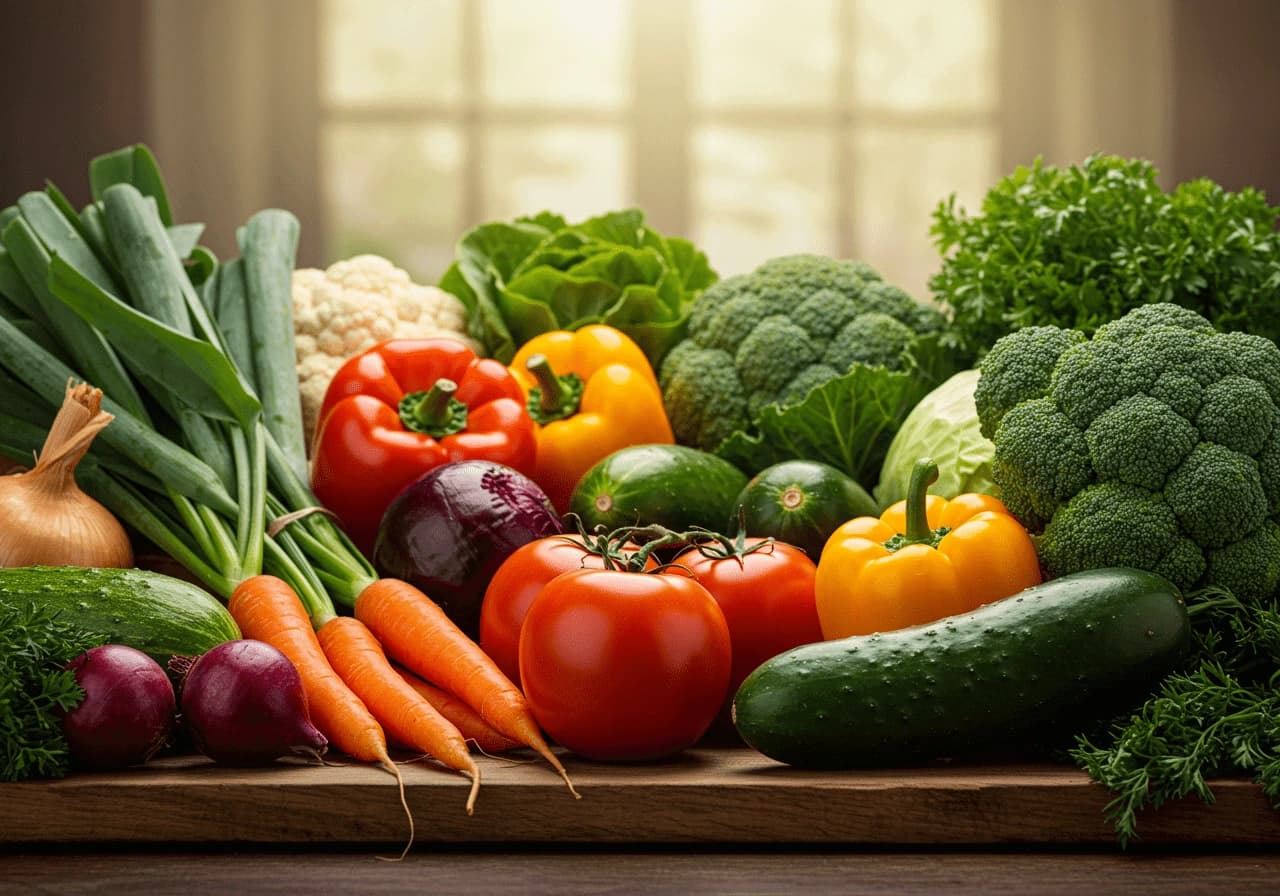
Eating seasonally in Kathmandu Valley isn't a romantic idea — it's the most reliable way to get good vegetables for less money. We track Kalimati wholesale prices weekly and compare them against retail to know which weeks in each month produce the best value. This is the calendar that emerges.
Why eating seasonally matters
Three concrete reasons:
- Price. A vegetable in peak season costs 30–60% less than the same vegetable out of season. The supply curve in Nepal is steep.
- Nutrient density. Vegetables harvested in season and consumed within 48 hours have measurably higher Vitamin C, folate, and antioxidant content than out-of-season fruit grown in greenhouses or shipped long distance.
- Flavor and texture. The least quantifiable but most noticeable benefit. A peak-season cauliflower in January cooks differently from one in July. The structure holds; the flavor is sweeter.
January – February
Winter peak — the year's best window for hardy and root vegetables. Cauliflower, cabbage, carrots, radishes, turnips, and fresh leafy greens dominate. Prices are at annual lows for these categories.
- Cauliflower (Kauli): Dense, sweet, and at half the price you'll see in May. Excellent for tarkari, momo filling, and roasting.
- Cabbage (Bandakopi): Tight heads, crisp leaves, ideal for slaws and slow-cooked dishes.
- Carrots (Gajar): Winter carrots are sweeter than summer crops. Try them simply roasted with cumin.
- Radish (Mula): Spicy, crunchy, indispensable for achar.
- Spinach and other leafy greens (Palungo, Saag): Peak quality. Buy daily; spinach loses crispness within 24 hours.
- Peas (Kerau): Fresh shelled peas are a defining ingredient of the season.
- Beetroot: Sweet, juicy, ideal raw or roasted.
March – April
The transition. Winter vegetables begin to lose quality (cabbage becomes loose, cauliflower bitters), but spring crops haven't yet hit full availability. This is the highest-volatility period on the produce calendar.
- Asparagus (Kurilo): Wild Nepali asparagus has a short, valuable window in March–April.
- Spring onions: Cheap, fresh, abundant.
- Broad beans (Bakulla): Worth seeking out — the window is brief.
- New potatoes: First crop of the year.
- Mustard greens (Rayo): The flowering stage of mustard, briefly available.
May – June
Pre-monsoon abundance. Cucumbers, tomatoes, beans, and summer squashes start arriving in volume. Prices stabilize at moderate levels.
- Cucumbers (Kakro): Peak season. Try them with salt and timur for a quintessentially Nepali summer snack.
- Tomatoes: Local tomato varieties have characteristically more flavor than off-season imports. Use generously.
- Beans (Simi): Multiple varieties — green, long, broad — in good supply.
- Summer squash: Various, including pumpkin varieties.
- Bitter gourd (Karela): Coming into season.
July – August (monsoon)
The monsoon transforms what's available. Gourd-family vegetables peak; leafy greens become difficult and expensive because of waterlogging in the lowlands.
- Bottle gourd (Lauka): The defining monsoon vegetable. Cheap, abundant, versatile.
- Bitter gourd (Karela): Peak quality.
- Snake gourd (Chichindo): Light, mildly flavored.
- Okra (Bhindi / Ramtoriya): Summer favorite, best when small and tender.
- Corn (Makai): Fresh local corn arrives.
- Chayote (Iskus): One of the most nutritious and underused monsoon vegetables.
September – October
Late monsoon to early autumn. Eggplant peaks; peppers are at their best; festival-season vegetables begin appearing.
- Eggplant (Bhanta): Peak — small, round, and local varieties are noticeably sweeter than summer harvests.
- Peppers (Khursani & Bhede Khursani): All varieties abundant. The hill peppers carry better flavor than commercial green capsicum.
- Pumpkin (Pharsi): Season starting; quality peaks in October.
- Taro (Pindalu): Traditional festival vegetable.
- Yam (Tarul): Dashain staple.
November – December
Early winter. Root vegetables return; fresh ginger arrives from the harvest; the autumn-late-monsoon transition crops finish.
- Sweet potatoes: Local varieties at peak quality.
- Fresh ginger: The new harvest is noticeably more pungent and juicy.
- Late tomatoes: Pre-frost tomatoes from greenhouse growers.
- New season cauliflower and cabbage: Quality improves through December.
- Leafy greens return: Spinach, mustard greens, and other saag at improving quality through the month.
Buying smart at Kalimati
The Kalimati Fruits and Vegetables Wholesale Market is the single largest produce hub in Nepal. Its daily price reports are published online and effectively set the floor price for vegetables across Kathmandu Valley.
- Use the daily price as a sanity check. If a retailer is charging more than 40% above Kalimati, ask why. Sometimes the answer (organic, certified, named-farm) is legitimate.
- Buy early. Fresh stock arrives by 6:30 AM. By mid-afternoon, what remains is yesterday's and today's unsold.
- Build a relationship. Returning weekly to the same vendor changes what you're shown and what gets set aside for you.
Storage rules by vegetable type
Different vegetable families need different storage. Getting this right easily doubles the useful life of your weekly shop:
- Leafy greens (spinach, mustard, kale): Wash, dry thoroughly, wrap in paper towel, store in a sealed container in the crisper. Holds 5–7 days.
- Brassicas (cauliflower, cabbage, broccoli): Refrigerate unwashed in a loose plastic bag with the opening folded under. 7–10 days.
- Root vegetables (carrots, radishes, beets): Remove green tops on purchase (they pull moisture from the root). Refrigerate in a perforated bag. 2–3 weeks.
- Tomatoes: Counter, never fridge. Cold destroys tomato flavor. Refrigerate only fully ripe fruit you can't finish that day.
- Onions, garlic, potatoes: Cool, dry, dark. Never with each other (potatoes near onions sprout faster). Never refrigerate raw potatoes.
- Gourds (lauka, karela, chichindo): Counter for 3–5 days, fridge crisper after that. Never wash before storing.
See our current fresh vegetables catalog, our fruits category, or read our guide on how farm-to-door delivery actually works in Kathmandu.
- Kalimati Fruits & Vegetables Market — Daily Prices — Reference for daily wholesale prices.
- WHO — Healthy Diet Fact Sheet — Recommended fruit and vegetable intake guidance.